Response to AAeV show restrictions
27th April 2026
The British Alpaca Society (BAS) is surprised and disappointed by the measures outlined in the AAeV 10 April newsletter concerning bTB-related restrictions.
The introduction of a five-year exclusion from shows for herds importing alpacas from the UK appears disproportionate and unsupported by current disease evidence. As such, these measures risk being perceived not as biosecurity-driven, but as unnecessarily restrictive to fair trade
Evidence and Disease Status
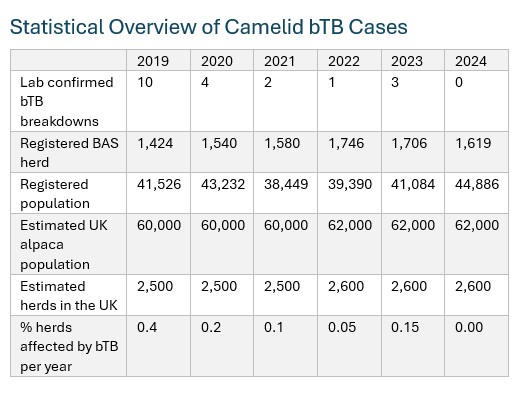
The latest data published by DEFRA shows that there were no laboratory-confirmed cases of bovine tuberculosis (bTB) in camelids across the UK in 2024. This follows a clear downward trend since 2019.
This progress reflects sustained and rigorous biosecurity efforts by UK herd owners, including:
comprehensive testing protocols (Enferplex and SICCT)
whole-herd surveillance before and after movement
strict isolation procedures
physical biosecurity measures such as badger-proof fencing and disinfection practices
Export Standards
UK export protocols to the EU are among the most stringent in Europe. Farms exporting alpacas must undertake:
* whole-herd SICCT (skin) testing
* whole herd Enferplex antibody blood testing
* full government verification prior to Export Health Certification
Any suspicion of disease results in immediate movement restrictions. This layered approach ensures a very high level of disease detection and control.
Proportionality and Cooperation
While we fully support robust disease prevention, such measures must be proportionate, evidence-based, and aligned with shared industry goals. Restrictions that effectively isolate one country’s breeders do not reflect the current epidemiological reality and may hinder genetic diversity and long-term herd improvement across Europe.
We firmly believe that collaboration—not isolation—is key to maintaining both high health standards and a sustainable, progressive alpaca industry.
We remain fully committed to working with European associations to support responsible biosecurity while preserving fair and open exchange within the sector.